
1. Planning and Design
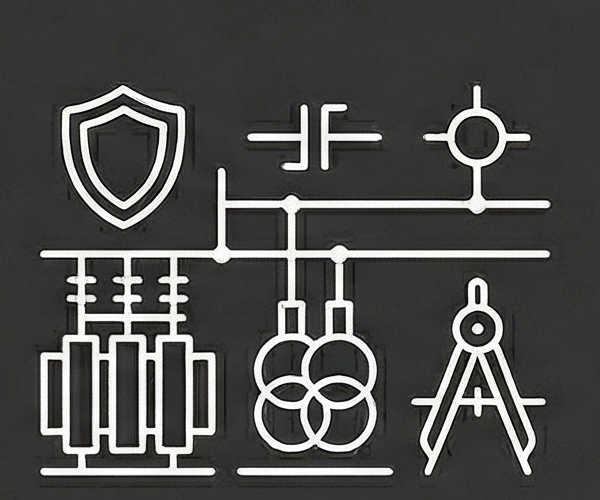
Planning and design are the foundation of every electrical substation project. This stage defines how the entire system will work and ensures the project is safe, efficient, and ready for future expansion.
The work includes preparing the site layout, developing the single-line diagram (SLD), and deciding the position of key equipment such as transformers, switchgear, and the control building. Load analysis is also carried out to make sure the substation can handle current power demand and future growth.
Main scope of work:
- Site layout planning
- Single-line diagram (SLD) preparation
- Positioning of transformers, switchgear, and control buildings
- Load analysis and future expansion planning
2. Site Preparation and Civil Works
Once the design is approved, site preparation and civil works begin. This stage prepares the land and supporting structures for the installation of electrical equipment.
The process includes land leveling, soil preparation, and improving ground strength so the site can safely support heavy equipment such as transformers. Drainage systems are also built to prevent water buildup within the substation area.
Concrete foundations are then constructed for steel structures and electrical equipment. Fence installation and access road works are also included to improve security and site accessibility.
Main scope of work:
- Land leveling and soil improvement
- Drainage system construction
- Concrete foundation works
- Fence and access road construction
3. Steel Structure Installation
Steel structure installation is an important step in supporting the electrical equipment inside the substation. All structures must be installed accurately to match the approved design drawings.
This stage includes the erection of steel columns, equipment racks, and bus supports. High-voltage equipment such as isolators and surge arresters is also installed during this process.
Main scope of work:
- Installation of steel columns and supports
- Installation of racks and bus supports
- Installation of isolators and surge arresters
- Alignment and structure checks
4. Cabling and Grounding
Cabling and grounding systems are essential for safety and system reliability in every electrical substation.
The grounding system, or ground grid, is installed throughout the substation area to protect both people and equipment from electrical faults. Control cables are also installed to connect monitoring, protection, and operating systems.
A strong and properly designed grounding system helps reduce risk and supports safe long-term operation.
Main scope of work:
- Ground grid installation
- Control cable installation
- Grounding continuity checks
- Electrical safety compliance
5. Equipment Supply, Installation, and Handover
The final stage of electrical substation construction includes the supply, installation, testing, and handover of all major equipment and supporting systems.
This work covers the installation of steel structures, equipment supports, bus ducts, transformer bases, and accessories such as bushings, fans, and oil conservators. It also includes full grounding works, cable tray and cable ladder installation, indoor and outdoor cable terminations, and cable support accessories.
All equipment is installed according to project drawings and engineering requirements to ensure the substation is fully ready for operation.
Detailed scope of work:
- Installation of steel structures, equipment supports, and bus ducts
- Installation of transformer support bases
- Installation of accessories such as bushings, fans, and oil conservators
- Ground grid installation across the full substation area
- Installation of cable trays and cable ladders
- Installation of indoor and outdoor cable terminations
- Installation of cable ladders and tray systems
- Installation of cable support steelwork, clamps, and U-bolts
- Installation of all equipment, electrical wiring, and conduits as per approved drawings
Why Electrical Substation Construction Is Important
Electrical substations play a critical role in transmitting and distributing power safely and efficiently. Proper construction ensures the system performs reliably, supports operational safety, and allows future expansion when power demand increases.
A well-planned and well-built substation also helps reduce maintenance issues, improve equipment life, and support the long-term stability of the electrical network.
Benefits of Professional Electrical Substation Construction
- Strong engineering and design standards
- Safe and reliable construction process
- Support for current and future power demand
- Accurate equipment installation
- Complete readiness for operation and handover